
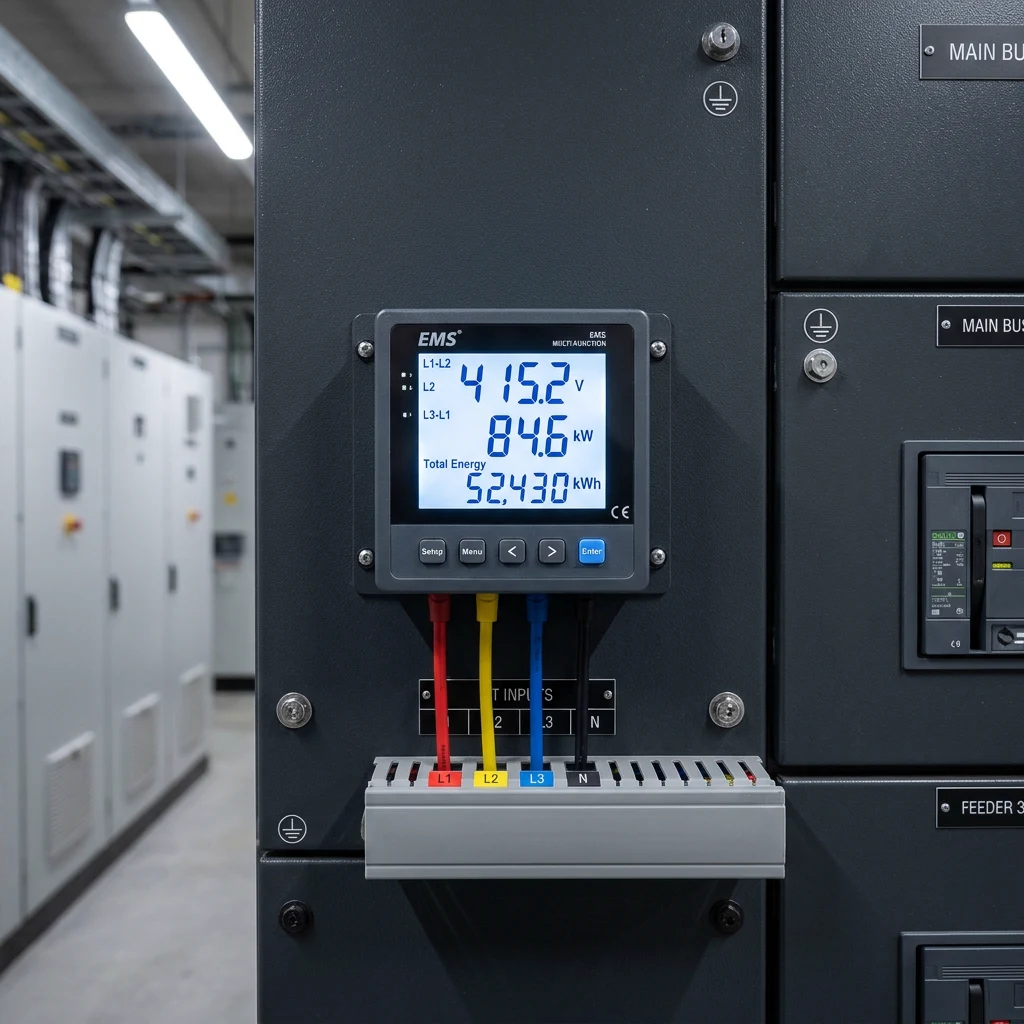
Power Monitoring (EMS)
Monitor Every Unit. Control Every Watt. Save Every Rupee.
Power monitoring measures how much electrical energy machines consume. It helps identify overloading, power wastage, and electrical faults. This leads to better energy efficiency, cost savings, and equipment protection.
Key Advantages
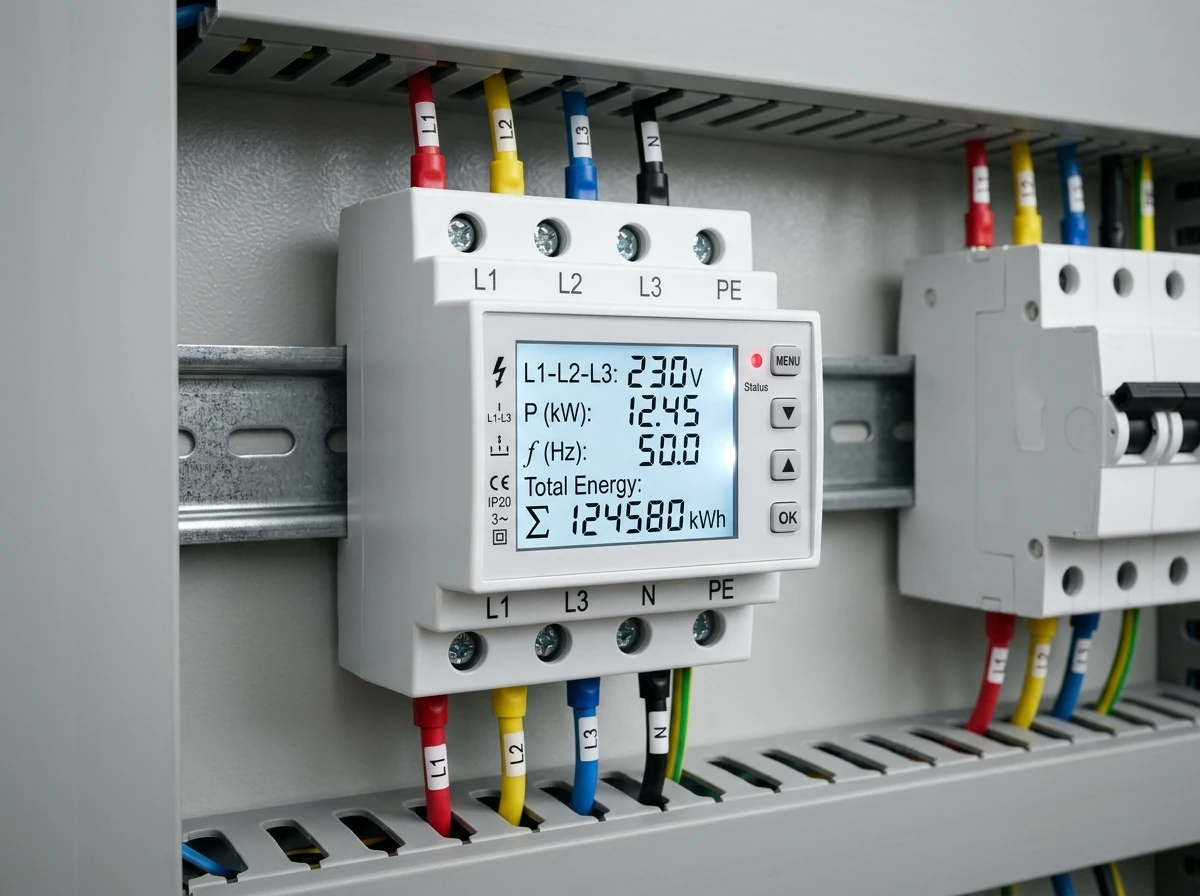
Monitor Every Unit — Sub-Metered Visibility
Measures real-time power consumption (kW) and energy usage (kWh) across individual machines and distribution panels to pinpoint energy hogs.
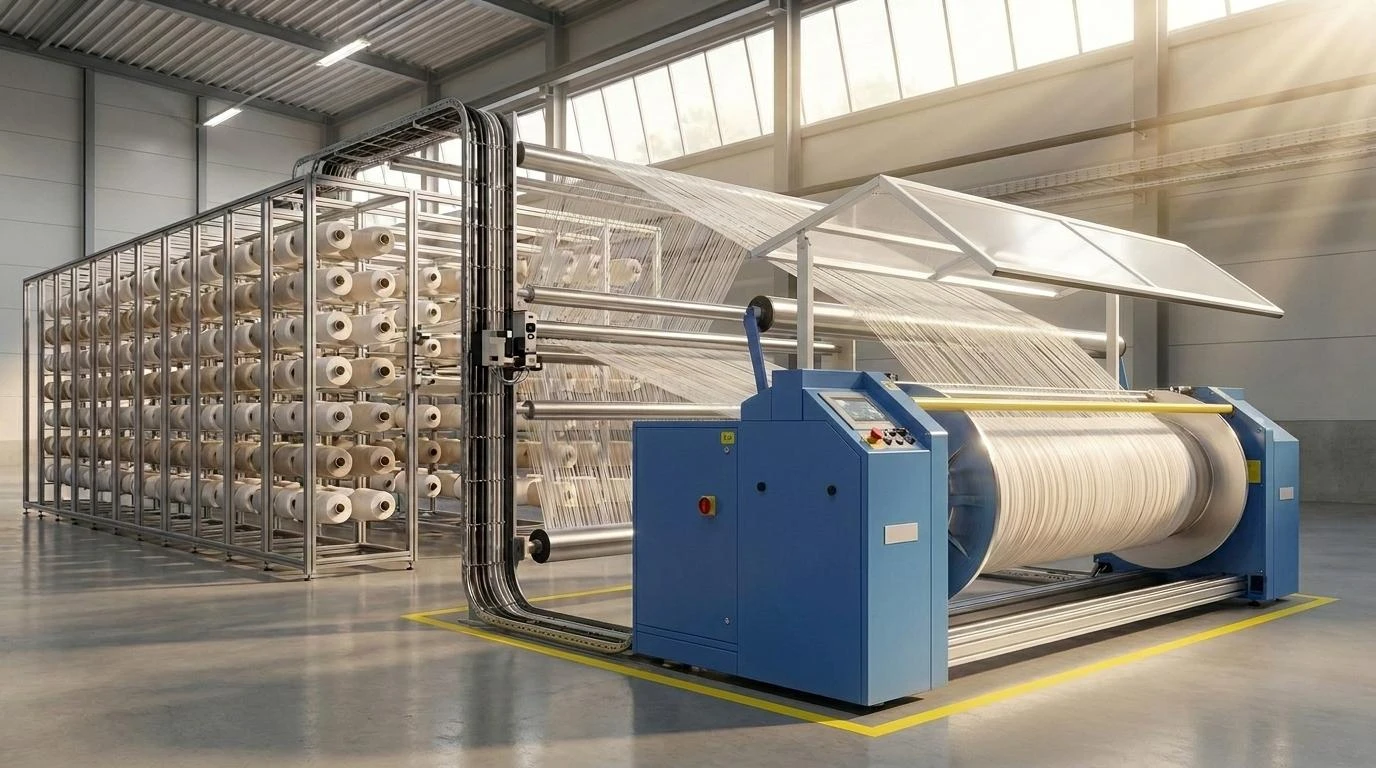
Control Every Watt — Power Factor & Quality
Active power factor monitoring and 3-phase voltage/current tracking prevent electrical penalties and protect expensive machinery from burnout.

Save Every Rupee — Real-Time Cost & Payback
Calculates actual electricity cost used by each machine or process in real time, tracking solar vs grid energy mix and eliminating peak demand fines.

Overload Detection & Fault Alarms
Instantly detects abnormal current spikes, phase loss, and overloads, triggering automated SMS, email, and visual alarms before trips occur.

Solar vs Grid Power Ratio Tracking
Shows how much energy is drawn from solar inverters versus the main grid, optimizing captive power generation and reducing billable units.
Department-Wise Performance & Benefits
Electrical Engineering & Maintenance Team
- Continuous 3-phase voltage, current, and active power draw measurement
- Instant overload, phase loss, and fault alert notifications
- Transformer load balancing and power factor (PF) guard to avoid EB penalties
Executive Management & Operations
- Real-time energy monitoring with Wi-Fi and worldwide mobile view access
- Shift-wise, daily, and monthly energy consumption history with cost analysis
- Tried and tested payback methodology trusted by top industrial manufacturing leaders
Ready To Integrate Into Your Mill Operations?
Schedule an on-site assessment with our automation engineers in Coimbatore. We inspect your existing machinery, configure Lakshmi MTRL sensor gateways, and tailor real-time dashboards to your exact production structure.